Prosthodontics
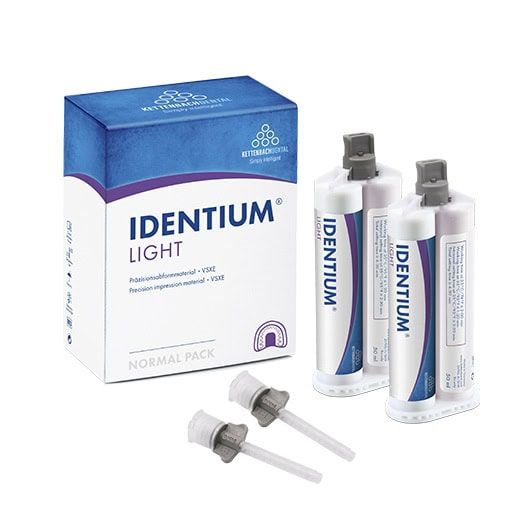
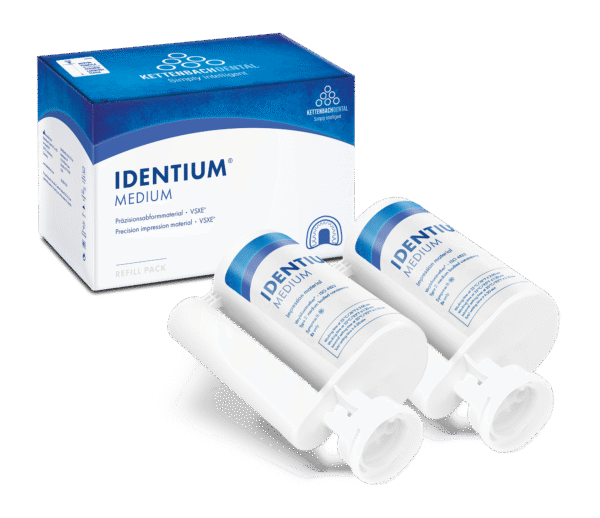
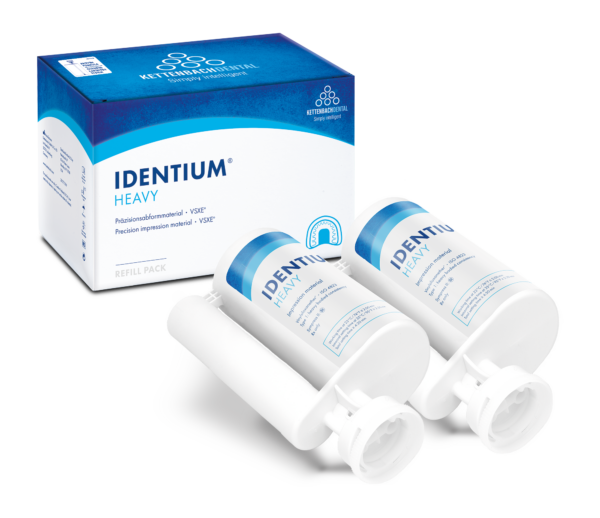
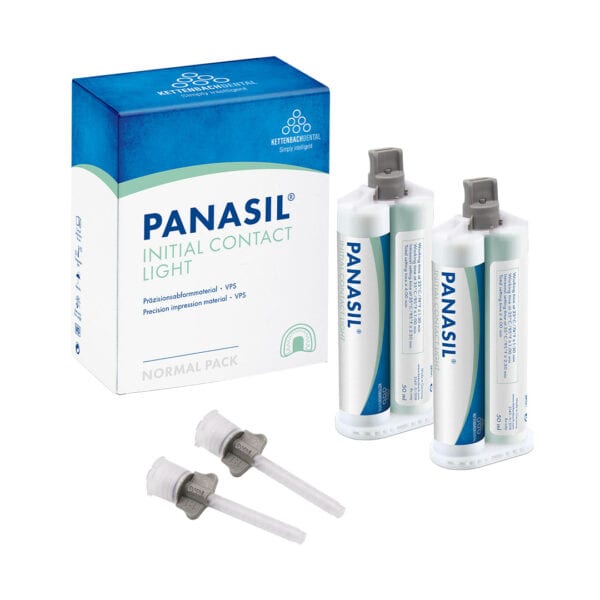
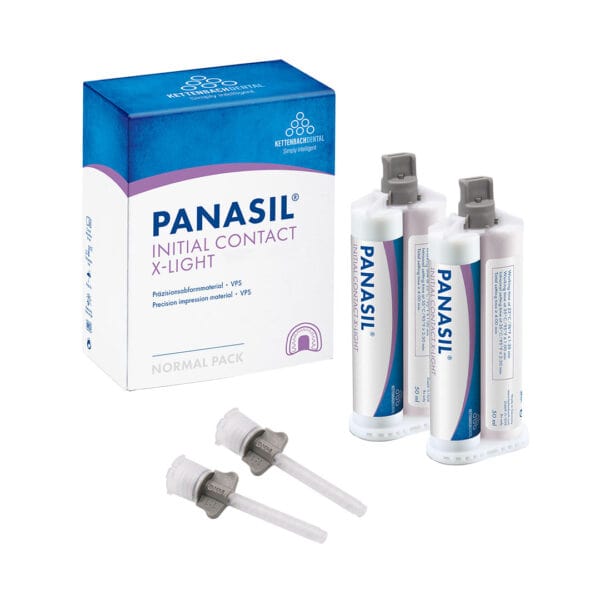
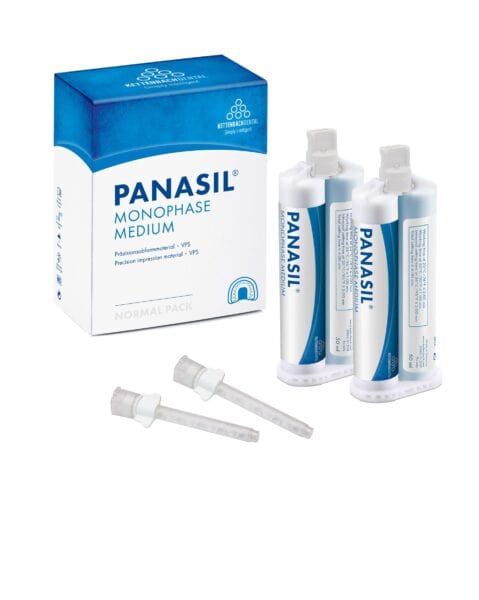
Product choice of impression material for crown and bridgeworkWhich consistency of Panasil® addition silicones would you prefer in the impression tray, and which impression technique do you choose? Or do you prefer Identium® with the best properties of polyether and addition silicones? This Vinylsiloxanether® (VSXE®) impression material has a unique composition and has been specially developed for all your crown, bridge, and implant work. The use of a particular impression material consistency is a matter of personal preference. Different impression combinations are therefore possible. See also our impression protocol for your specific impression technique in order to produce a high-quality impression. In addition, there are numerous clear instruction videos about Kettenbach Dental products in which colleagues share their methods and experiences.
Nitrile can interfere with the bonding of Visalys® Temp (and other temporary crown and bridge materials). Although direct contact with the glove before curing is very unlikely, vinyl or latex gloves are recommended.
CAVE: Considering your workflow, keep in mind that latex gloves can have a negative effect on the curing of A-silicones.
Yes. However, ensure that eugenol-free temporary cements are used if it is planned to incorporate the subsequent permanent restoration of a composite cement. Eugenol (clove oil) can impair the chemical curing of the composite cement.
Yes.
In principle, yes. Cotton buffs have proven particularly effective.
In principle, yes. Cross-toothed milling machines made of stainless steel have proven particularly effective.
Milling machines can quickly become dull if the smear layer has not been removed beforehand. Therefore, removing the smear layer before milling is definitely recommended. With Visalys® Temp, it can be done very quickly with a disinfectant wipe, for example.
Newly created temporary restorations still contain the lubricating layer, which reacts during a repair or addition, thus creating a chemical compound. This is not the case with older temporary restorations, so milling and bonding serve to create a better chemical bond.
Yes. Any composite can be used for repairs, e.g. Visalys® Bulk Flow.
The curing of the temporary restoration should be checked extraorally, e.g. by means of a material sample on the glove, and intraorally. As soon as the material is so hard that it can be easily pressed in with a fingernail or a probe and an impression remains, the temporary restoration can be removed from the patient’s mouth at the earliest.
Visalys® Temp continues to harden afterwards. After approx. 4 minutes, the material is hard enough that it can be finished well and no longer deforms even under high pressure.
The ideal time for removal depends on the personal preference of the user: Some users prefer it when the temporary is still relatively elastic – others want the temporary restoration to be very hard when it is removed from the mouth. On the other hand, the individual oral situation must also be taken into account: If, for example, there are large undercuts, it is better to remove the temporary restoration at an early stage.
Yes. Visalys® Temp is compatible with any impression material. However, an A-silicone impression is recommended (e.g. Silginat® or Panasil® Putty), as it can be stored and reused for possible repairs or for remaking the provisional.
Yes. Visalys® Temp is a composite as well and could chemically interact with existing composite restorations. Therefore, all composite fillings and core build-ups should be insulated beforehand, for example with petroleum jelly (Vaseline).
No. Visalys® Temp is purely self-curing.
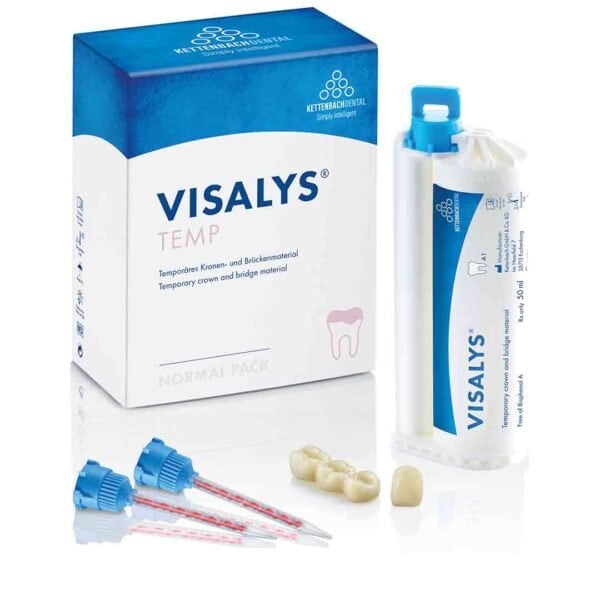
Visalys® Temp from Kettenbach Dental is ideal for the fabrication of temporary crowns, bridges, inlays, onlays, and veneers. It is perfectly suitable for long-term temporaries and has exceptional fracture resistance and very good marginal stability. It offers excellent flow, thixotropy, stability, and user-friendliness. It has a low smear layer and finishes quickly and beautifully to a high gloss. Its natural translucency and opalescence provide for seamless integration in the oral situation, and it is a safe choice as it does not contain bisphenol A.
Visalys® Temp from Kettenbach Dental is a reliable and aesthetic restorative material. It is exceptionally stable and user-friendly, making it ideal for the fabrication of temporary crowns and bridges (as well as provisional inlays, onlays, and veneers). Offering exceptional fracture resistance and stability, it carries a low risk of fracture and is also suitable for long-term temporary restorations.